


Shattered Pixel Dungeon
4.89.86K Reviews
App Specs
- Version
- Varies with Device
- Updated On
- License
- Free
- Downloads
- 5,000,000+
- Developer
- Shattered Pixel
- Categories
- Role Playing
- Platform
- Android
Screenshots
 Analysis by AppCompare
Shattered Pixel Dungeon is the kind of role-playing game I keep coming back to when I want a demanding game that fits into short sessions. It looks simple at first: choose a hero, enter a dungeon, collect equipment, fight monsters, and try to survive. The real appeal appears after a few failed attempts, when I start noticing how much depends on positioning, resource use, timing, and knowing when to stop pushing forward.
Developed by Shattered Pixel, this free dungeon-crawling RPG has earned a 4.8 average from around 171 thousand ratings and has passed 5 million installs. Those numbers make sense to me, but they do not tell the whole story. This is not a game I would recommend because it is immediately comfortable. I recommend it because it rewards attention and gradually teaches you to make better decisions.
It is rated Everyone 10+, with optional in-app purchases priced from $4.99 to $19.99 per item. I found the basic experience substantial enough to judge on its own, so I would approach those purchases as optional support rather than something required to understand the game. The game originally appeared on September 15, 2014, yet its compact presentation still feels well suited to modern phone play.
Where new players usually get stuck
I’ve found that new players often get stuck not on a single enemy, but on the moment they stop checking the whole room. This section looks at how small habits—especially planning a retreat before exploring—can make early runs easier to understand without making the dungeon forgiving.
The first difficulty is understanding what matters
The opening runs can feel unfair if I treat the dungeon like a straightforward action game. Enemies are visible, turns are easy to follow, and the controls are not complicated, but every move can change the next situation. Walking toward an enemy, opening a door, exploring a side room, or spending a healing item all have consequences. The game rarely stops me to explain every implication, so I had to learn by paying attention to the results.
My most useful early adjustment was to stop measuring success by how far I reached in one attempt. A failed run still teaches me which enemies deserve distance, which rooms are dangerous, and which resources I waste too quickly. That makes the roguelike structure feel less like repeated punishment and more like a cycle of observation and correction.
The game is turn-based, but that does not make it relaxed in the careless sense. I can take time before committing to a move, yet I still need to think ahead. If I enter a fight with poor health, limited space, or no clear escape route, the problem usually began several turns earlier. This is why beginners who rush may blame random outcomes when the larger issue is often a chain of small decisions.
Worth Reading Before You Choose

EA SPORTS FC Mobile 26 Is a Bigger Football Game, but It Takes Time

Flipboard Shows What News Apps Must Do Beyond the Feed

Switching to Android Auto Means Rethinking Your Driving Routine

Google Calendar Makes a Crowded Week Easier to Manage

Ludo King Makes the Most of the Minutes Between Plans

Baby Panda World Brings Quick Play to Modern Phones, but Its Game Library Feels Busy
Equipment creates choices rather than simple upgrades
One of the easiest traps is assuming that every new item should be used immediately. I learned to inspect the situation before changing equipment or spending a valuable resource. A stronger-looking item may not solve the immediate problem, while keeping a useful option for the next encounter can be more important than improving a number right now.
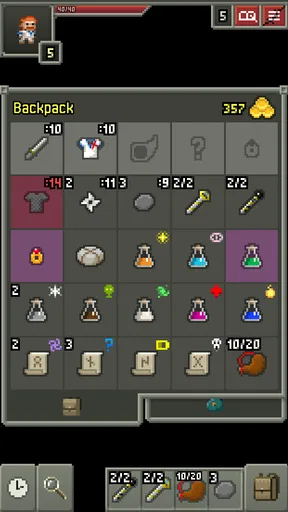
This creates a practical routine. I check my health, available space, escape options, and likely route before beginning a difficult fight. I also avoid carrying every item indefinitely just because it might become useful later. Inventory decisions matter because clutter makes it harder to recognize the tools that can actually save a run.
The important skill is not collecting everything; it is identifying what the current floor is asking me to preserve. Sometimes that means saving a consumable. In another situation, it means using it early enough that I do not lose the run while trying to be overly efficient.
Exploration can be more dangerous than combat
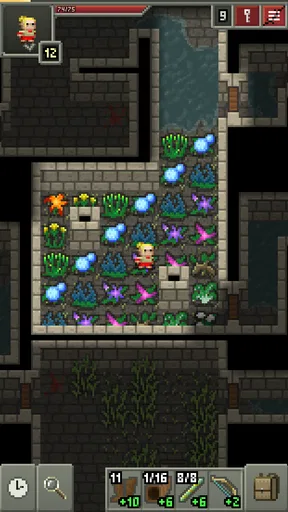
Combat receives most of the attention, but careless exploration caused many of my early failures. I used to open spaces quickly and move through rooms without considering how an enemy might approach from the side. Later, I began treating doors, corners, and narrow passages as part of the strategy rather than background scenery.
A simple habit helped: before stepping into an unfamiliar area, I ask where I could retreat if the next encounter goes badly. If the answer is nowhere, I slow down and look for a better angle. This is especially useful when my health is already reduced or when I have spent the item that would have given me a safer recovery.
Setup checks before blaming the game
Before deciding that a run or control is behaving strangely, I like to check whether I’m playing with enough attention and whether my intended action fits the situation on screen. The next section covers a few practical checks that help separate a genuine interruption from a rushed tap or a misunderstood turn.
Start with a clean, patient first session
There is no complicated setup ritual needed to begin playing, but I would still avoid judging the game during a distracted first attempt. Its early learning curve rewards reading what happens and remembering it. If I play while rushing between tasks, I am more likely to miss a warning, waste a resource, or make a move without considering the surrounding space.
For a first session, I recommend choosing a quiet stretch of time and treating the initial run as practice. I would not search for an ideal build or try to imitate an advanced player immediately. The useful questions are simpler: Which situations make me lose health? Which items do I fail to use? Do I understand why an encounter went wrong?
The game is free to start, which makes experimenting easy. The optional purchases do not change my basic recommendation: first decide whether you enjoy turn-based dungeon survival, then consider whether you want to support the developer. Someone looking for a paid game with a clearly guided campaign may prefer a different role-playing experience instead.
Check the basics when a run feels broken
When something appears wrong, I first separate a true technical issue from a rules misunderstanding. If an action does not produce the result I expected, I replay the situation mentally: was the target in range, was the route blocked, did I use the right item, and had the enemy already changed position? In this game, a surprising outcome is often a sign that I overlooked part of the board state.
If the interface seems unresponsive, I pause rather than repeatedly tapping. I check whether the game is waiting for a different selection, whether my character is blocked, and whether I am trying to perform an action that the current situation does not allow. Closing and reopening the game is a reasonable general step if the interface genuinely stops responding, but I would not use repeated restarts as a substitute for understanding the turn.
It is also worth keeping the device in a stable state before a serious run. I avoid switching rapidly between demanding apps, and I make sure I am not playing with a nearly exhausted battery when I want a longer session. These are ordinary checks, but they prevent a tense run from being interrupted by a problem unrelated to the game itself.
Use the controls deliberately
The controls are approachable, yet touch input can encourage accidental movement if I tap too quickly. My best workflow is to make one deliberate decision at a time, especially near enemies, hazards, or unexplored rooms. I do not treat the screen like an action game where speed improves performance.
This slower rhythm also makes the game more comfortable on a phone. I can play while waiting for an appointment, but I still need enough attention to remember the plan for the current room. A short session works well when I have a clear goal, such as exploring carefully or testing how I handle a particular kind of encounter, rather than trying to force a complete successful run.
Recovering a run after a bad decision
A bad move does not always end a run, but reacting in a hurry can turn a manageable setback into a crisis. Here I focus on pausing, reassessing what remains available, and choosing a smaller, safer objective when the original plan no longer makes sense.
Do not turn one mistake into three
My instinct after taking unexpected damage was to compensate immediately. That often made things worse. I would rush toward the next enemy, spend several items in panic, and then discover that the original mistake was manageable. A better recovery process is to stop, inspect the surroundings, and decide whether the danger is immediate or merely inconvenient.
If I have lost health, I consider whether retreating is safer than continuing. If I have used an important resource, I change the plan instead of pretending the run is unchanged. This sounds obvious, but it is one of the most valuable habits in a game where resources and positioning are connected.
I also learned to distinguish a recoverable run from a doomed one without giving up too quickly. A poor start does not automatically mean failure. If I still have room to maneuver and a sensible route forward, careful play can stabilize the situation. On the other hand, repeatedly entering fights with no escape plan usually compounds the problem. The right response is not always bravery; sometimes it is reducing exposure.
Build a personal post-run review
After a failed attempt, I ask myself three practical questions. What was the first decision that created danger? Which resource did I preserve for too long? What information did I ignore? This turns failure into a small checklist for the next run.
For example, if I repeatedly lose after exploring aggressively, my next attempt focuses on controlled movement rather than a new character choice. If I keep dying while trying to save healing options, I experiment with earlier use. If I lose because I cannot retreat, I pay more attention to room layout and enemy approach. These adjustments are more useful than simply hoping for better luck.
This is one of the game’s strongest hidden advantages: it teaches transferable decision-making without presenting itself as a tutorial. I become better not because the game gives me a long explanation, but because the consequences are clear enough to analyze. That makes each restart meaningful for players who enjoy learning systems.
When a different workflow is better
Not every player will enjoy this recovery loop. If I want a role-playing game where a mistake can be undone easily, where the story constantly moves forward, or where character progression is the main reward, this may feel too demanding. A conventional campaign RPG is a better choice when I value narrative continuity over repeated experimentation.
Likewise, players who prefer real-time combat may find the deliberate turns too slow, while players who dislike losing progress may never become comfortable with the roguelike structure. I would not recommend forcing myself through several sessions simply because the game is respected. Its design depends on accepting failure as part of the experience.
When the game is not the cause
Not every frustrating outcome means the game has failed, and not every defeat is simply bad luck. This section considers how distraction, repeated risky habits, and expectations of steady progress can shape the experience—and when a different kind of RPG may suit you better.
Separate bad luck from a bad routine
Randomness can influence a run, and some attempts will simply offer more useful opportunities than others. Still, I found it easy to overstate luck when I was repeating the same risky behavior. If I enter every fight at low health, explore without an exit, or spend resources only when the situation is already desperate, a poor result is not surprising.
A useful test is to change one habit for several runs. I might slow down around doors, preserve more space for retreat, or use recovery items before reaching a crisis. If the results improve, the main issue was probably my workflow rather than the game. This approach is more reliable than changing everything at once because I can see which decision actually helped.
Recognize device and attention problems
Short sessions can create a misleading sense that the game requires little concentration. I have played while multitasking and then blamed the controls for a move I made without looking carefully. The game is better suited to focused pauses than to background play.
If the display is crowded by notifications, the device is struggling with other tasks, or I am repeatedly interrupted, I postpone a serious run. There is no benefit in testing a difficult section while distracted. A stable connection is not the main concern of the gameplay itself, but a stable device and uninterrupted attention make the experience much more predictable.
When a problem persists across restarts, I would document exactly what happened rather than describing it only as “the game failed.” The character’s position, the action I attempted, and what appeared afterward are more useful details for troubleshooting than a general impression. That habit also helps reveal whether the same misunderstanding is repeating.
Know what kind of player gets the most from it
I think this is a particularly good fit for players who enjoy turn-based tactics, compact interfaces, and games that respect experimentation. It works for someone who wants a deep challenge without committing to a long story session. The dungeon format also makes it easy to stop after a short attempt and return later with a new plan.
It is less suitable for someone seeking a relaxing power fantasy, constant rewards, or a guaranteed sense of progress. The game asks me to accept that an hour of careful play can still end in failure. That tension is the point for some players and the central frustration for others.
The age rating of Everyone 10+ makes it accessible to a broad audience, but accessibility should not be confused with simplicity. Younger or inexperienced players may understand the controls quickly while still needing time to grasp the strategic consequences. I would introduce it as a thoughtful challenge rather than a casual button-tapping game.
How it compares with familiar role-playing alternatives
Compared with a standard mobile RPG, this game gives me less emphasis on scripted progression and more emphasis on moment-to-moment decisions. There is no need to wait for a large story scene before the next meaningful choice. The dungeon itself supplies the tension, and my route, equipment decisions, and reactions shape the run.
Compared with an action-oriented dungeon game, it feels less dependent on reflexes. I can think before acting, but that does not make it easy. The challenge moves from aiming and rapid movement to prediction, positioning, and resource management. Players who find real-time combat stressful may appreciate this, while players who enjoy constant motion may find it restrained.
Compared with a heavily guided RPG, it also asks me to learn through consequences. That makes it more rewarding once the systems click, but less welcoming if I want every objective explained. I would choose this over a conventional alternative when I want replayability and self-directed improvement. I would choose the conventional alternative when I want a strong linear story, forgiving checkpoints, or a character build that remains safe from one session to the next.
My practical verdict after repeated runs
Shattered Pixel Dungeon is free, widely played, and easy to begin, but its real value is not its low entry cost. It is the quality of the decisions packed into each run. I enjoy that a small movement choice can matter later, that equipment is not automatically obvious, and that failure gives me something concrete to reconsider.
The friction is equally clear. The game can feel opaque during the first attempts, and players who dislike restarting will struggle to find its rhythm. It also demands more attention than its simple visuals suggest. I would not install it expecting a gentle, story-led role-playing adventure or a quick reward loop.
For me, the best way to approach it is to play slowly, treat early failures as instruction, and review the first mistake instead of the final defeat. Keep an escape route in mind, use resources before panic takes over, and do not assume that the newest item is automatically the right answer. Those habits reveal why the game has retained such a strong audience since its 2014 release.
My recommendation is clear: choose it if you want a compact but serious dungeon RPG that rewards patience, analysis, and repeated learning. Skip it if you need constant forward progress or dislike losing a run. For the right player, this is not merely something to pass time with; it is a small strategy exercise that becomes more satisfying every time I understand one more reason behind a victory or a defeat.
Pros
- Deep
- strategic gameplay with meaningful choices every run.
- Many character classes and subclasses encourage experimentation.
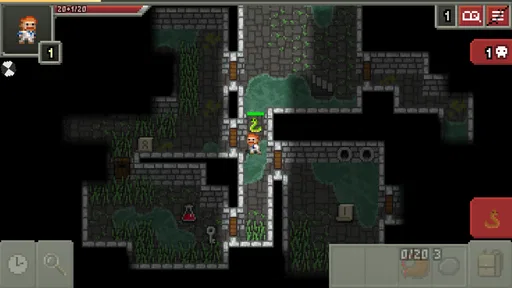
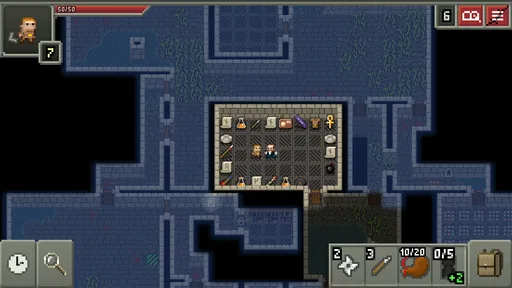
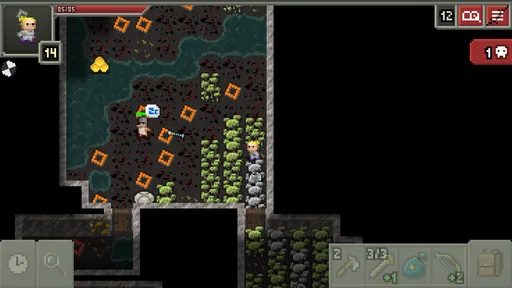
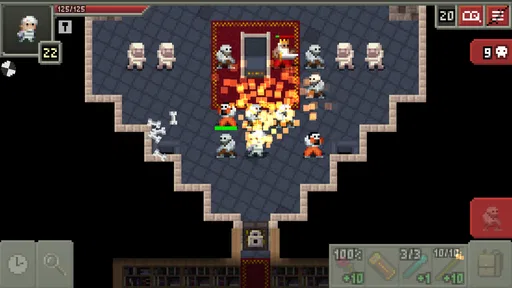
- Pixel-art visuals are charming and clear on small screens.
- Frequent updates add balance changes
- content
- and improvements.
- Open-source and free
- with no energy system or forced purchases.
Cons
- Permadeath can feel harsh after a long
- carefully planned run.
- Early progress may be confusing without learning enemy patterns.
- Runs can become lengthy when exploring every available area.
- Some item effects are difficult to understand without experimentation.
- Random generation occasionally creates awkward or frustrating layouts.
FAQs for Shattered Pixel Dungeon
What is Shattered Pixel Dungeon?
Shattered Pixel Dungeon is a challenging, turn-based roguelike role-playing game for Android and iOS. You choose from several heroes, explore randomly generated dungeons, fight monsters, collect equipment, and try to reach the deepest floors. Every run is different, and permanent death means that losing your character sends you back to the beginning, encouraging careful planning and repeated attempts.
Is Shattered Pixel Dungeon free to play?
Yes, Shattered Pixel Dungeon can be downloaded and played for free. The game is designed as a complete experience rather than a title built around constant energy limits or mandatory purchases. Depending on the platform and store listing, optional support or donation features may be available, but the core classes, dungeon exploration, combat, and progression are accessible without paying.
Is Shattered Pixel Dungeon suitable for beginners?
It is playable by beginners, but it is not an easy game. The controls and basic rules are straightforward, while the deeper systems—such as hunger, equipment upgrades, enemy behavior, traps, and resource management—take time to understand. New players should expect to lose frequently at first. Careful experimentation and learning from each failed run are essential parts of the experience.
Does Shattered Pixel Dungeon require an internet connection?
Shattered Pixel Dungeon is primarily a single-player offline game, so you can generally explore dungeons and complete runs without a continuous internet connection. This makes it convenient for travel or situations with limited connectivity. You may still need internet access to download the game, install updates, or use platform-related services, but normal gameplay does not depend on online matchmaking or servers.
What makes Shattered Pixel Dungeon different from other dungeon games?
Its main appeal comes from combining classic roguelike difficulty with thoughtful, turn-based decision-making and extensive item experimentation. Randomly generated floors, multiple heroes, varied abilities, hidden secrets, and permanent death make every attempt feel distinct. Success depends less on fast reflexes and more on positioning, timing, identifying useful resources, and deciding when to fight, explore, or retreat.


